(Originally posted on Medium)
Design Thinking and the Art of Innovation
I have always believed that everybody can increase their creativity if they put their mind to it, and the recent course at Stanford University on Design Thinking and the Art of Innovation (XDES400–019) provided the essential tools to do just that. I was inspired to take this course after watching David Kelley’s TED talk on How to build your creative confidence.
The class was led by Bill Burnett, the executive director of d.school who has worked in both start-ups and Fortune 100 companies, including seven years at Apple. Here are my key takeaways from the course.
Brainstorming
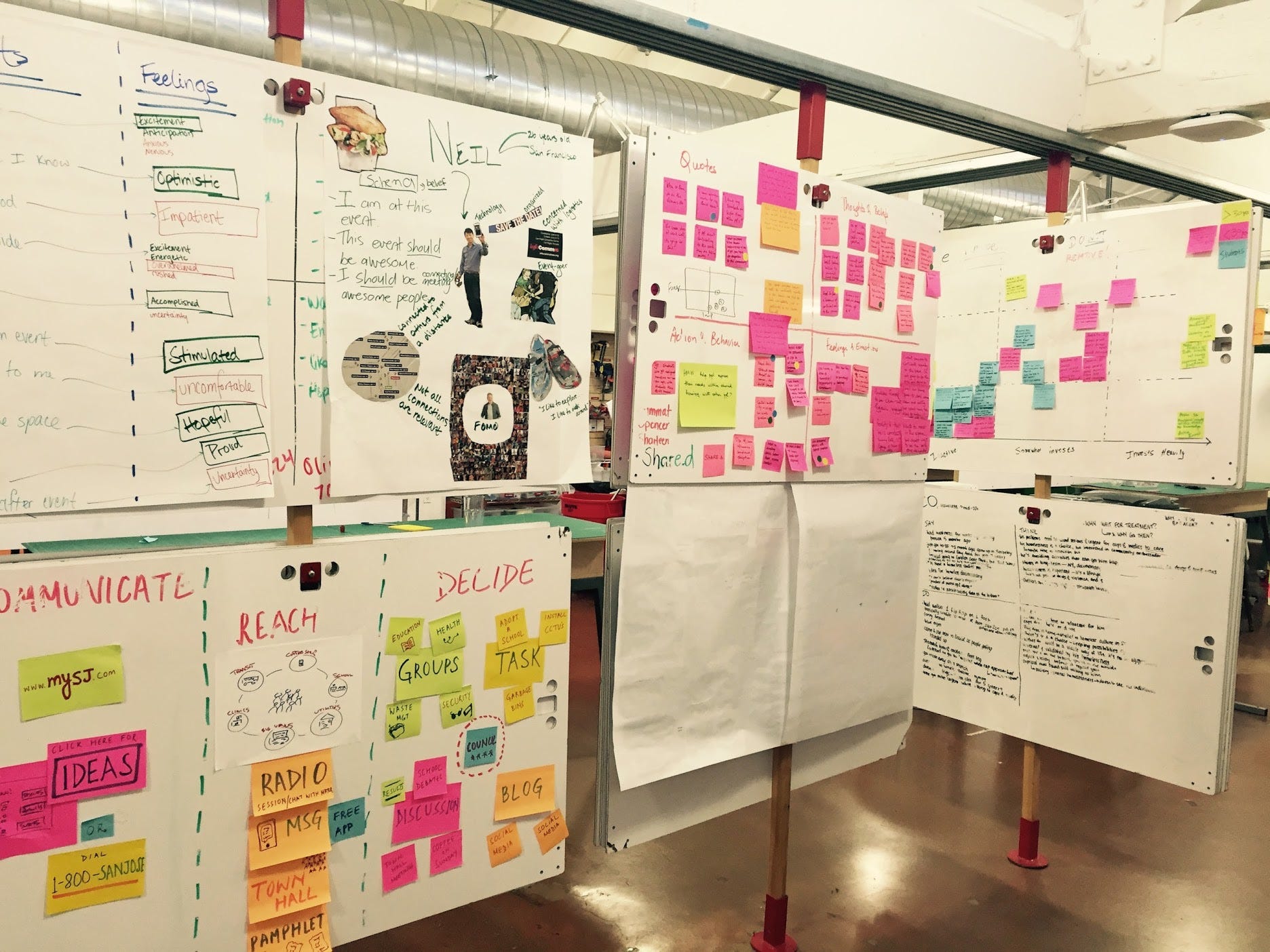
We have all tried brainstorming at some point, but the approach in d.school was scientific; unlike traditional approaches.
Practice Makes Perfect: Creative thinking in general and brainstorming, in particular, are skills that need to be practiced. Burnett mentioned Gladwell’s’ 10,000 Hour Rule to achieve expertise, with continual practicing using right approaches. He also referenced an article in the New Yorker by Jonah Lehrer called ‘Groupthink: The Brainstorming Myth’. The article argued that individual ideation produces more creative ideas than brainstorming, which Burnett mentioned was expected of novices in the skills.
Warmup: Like you have to warm-up before hitting, the gym, the brain also needs flexing before it gets in the Zone. We experienced Several improvisation activities /games to warm up as a group. The point of these exercises is not to get good results, but to make you break away from your other tasks, discussions, and everything else that is occupying your mind. This also helps in ensuring that no idea is shut down and the imagination runs amok.
Yes and…: During brainstorming try to push boundaries, encourage wild ideas, Ensure no idea is shut down, and there is no judgment. Let the imagination run amok. Push the limits of impossible and simulate “possible” ideas that may be rather out of the box. The focus should be on quantity and not quality. Build upon other people’s ideas by using a Yes and … technique.
Selection Criteria: Here, Burnett said, is where most groups fall short. He suggested using colored dots to votes on ideas most likely to succeed, most likely to delight and ideas that would create the greatest breakthrough.
Prototyping for Empathy
Several times during the course, participants were asked to make something physical to test with their users. These prototypes were made in less than 10 minutes using everyday materials like paper, aluminum foil, and pipe cleaners.
An amazing array of designs emerged and a strong creative energy lit up the room. When the prototypes were shared to validate insights, there was a great sense of genuinely being listened. Several participants came up with prototypes showing true potential, and I would not be surprised to see few of them on Kickstarter soon.
So the biggest takeaways were: understand, observe, visualize and iterate. The trick here is, that the big deal is the iteration. Rather than planning incessantly you quickly come up with something smart, you show it to users, and then you do it again and again.
Tour of IDEO

We believe great innovators and leaders need to be great design thinkers.
- David Kelley
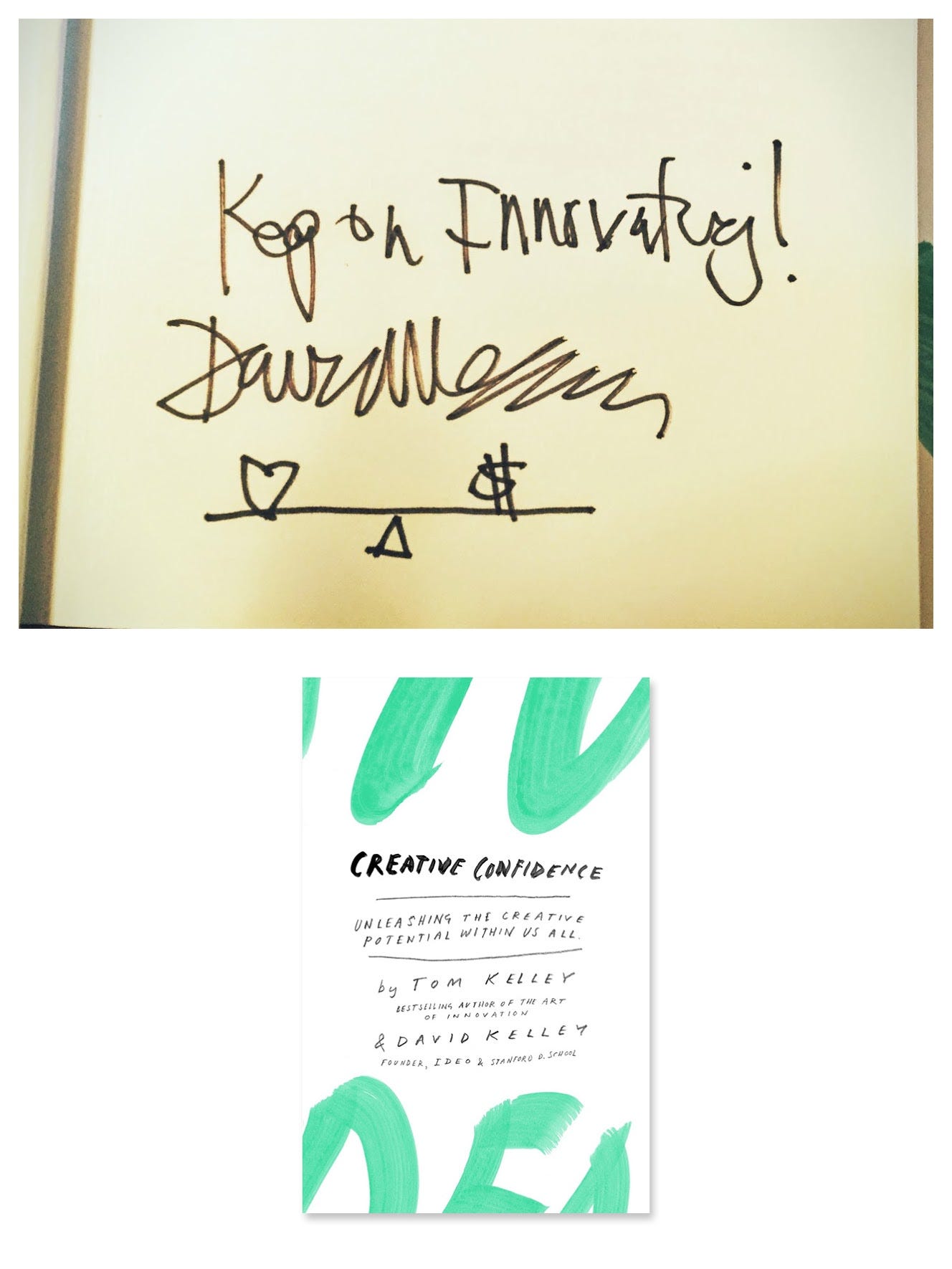
The first day of training ended with a tour of IDEO and a Creative Confidence talk by David Kelley, founder of IDEO and Stanford’s d.school. Walking around IDEO brought home the importance and impact of physical spaces and how rapid prototyping directs the innovation process. Kelley reiterated the importance of human-centric design, quick iterations, and building on other’s ideas. Loved the signed copy of his book.
Summary
Above all, when taking this course I loved the fact I got to meet and interact with diverse, talented people from various backgrounds, some starting their venture and some planning on impacting innovation practices in their organization. Unarguably the best course I have taken in recent history.
Check out his TED talk on how to build creative confidence, the one that inspired me to take this course in the first place.